
"Planted in"
24000 article(s) found

Why is the coffee in Yunnan getting better? What coffee varieties are mainly planted in Yunnan coffee?
Professional coffee knowledge exchange more coffee bean information please follow coffee workshop (Wechat official account cafe_style) Yunnan coffee only began large-scale commercial cultivation in 1988, of course, it is a leading project promoted by the local government, with the assistance of the United Nations Development Programme and the World Bank, since then coffee has been slowly formalized in China.

The coffee tree planted by Robusta is a kind of tree between shrubs and tall trees.
Professional coffee knowledge exchange more coffee bean information please pay attention to the coffee workshop (Wechat official account cafe_style) Arabica coffee beans grow in the tropics in colder high-altitude areas, that is not suitable for Arabica seed growth of high-temperature low-altitude areas, is the robusta growing world. Robustado grows in lowlands 200-600 meters above sea level and likes warm climates.

Introduction of the treatment method for the characteristics of varieties produced in the manor area with G1 flavor and taste of Yejiaxefi
Yega Xuefei Coffee introduces that Yega Xuefei's coffee trees were planted by European monks (a bit like Belgian monks growing wheat to brew beer), and later transferred to farmers or cooperatives. Yega Xuefei is actually constructed by surrounding coffee communities or cooperatives, including Edido Idido, Hafusha Harfusa, Hama Hama, Biloya near Fog Valley Misty valley.

3801 mu of coffee has been planted in Fengqing County
Coffee is a new industry in Fengqing County. this year, the municipal government ordered Fengqing County to plant 5000 mu of coffee. after the promotion of coffee production in Fengqing County, the county people's government promptly mobilized and made development plans. Through investigation, it was finally decided to develop seven villages in Yingpan, Luodang and Xinhua, which are rich in resources in hot areas, with an area of 5000 mu, with the three towers in Yingpan as the focus.

A brief introduction to the description of flavor, taste and aroma characteristics of Alishan Mazu boutique coffee
Alishan Mafeel is planted in the Alishan Mountains, and the Alishan Mountains are uniquely located in the global coffee belt. Because of the high altitude and the temperature difference of more than 10 degrees between day and night, the coffee beans produced are of the best quality, with full grains, thick pulp, sweet and mellow taste, sweet, non-astringent, not bitter, not sour, and perfectly showing the taste of coffee.

The growing environment of coffee where can coffee be planted in a suitable coffee growing area
Professional coffee knowledge exchange more coffee bean information Please pay attention to the coffee workshop (Wechat official account cafe_style) Coffee growing reference conditions Coffee growth conditions will reflect the quality of coffee climatic conditions Arabica coffee is not resistant to high temperature and humid climate, can not be in a long-term low temperature below 5 ℃, so more planted in the steep slopes of 1000-2000 Michael land above sea level.

Introduction of Katim Coffee Bean Flavor description Grinding scale Variety treatment method
Katim coffee bean flavor description grinding scale variety treatment method introduces that this variety is a variety with high and stable yield. The results of trial planting in different ecological types show that as long as it is planted according to the technical measures of high-yield cultivation, a higher yield will be obtained. the average yield per mu is more than 150 kg, and the small area can reach more than 400 kg. 1. The state-run Lujiang farm in Baoshan City planted 12.6 mu in March 1991.

How to plant coffee trees
The planting time of coffee is from June to July after the beginning of the rainy season. The planting day is cloudy or light rainy, and can be planted all day. If the planting day is sunny, it should be planted before 11:00 and after 04:30 in the afternoon. Seedlings should choose 5 pairs of true leaves, with a height of more than 0.15 meters, and strong seedlings without branches. The row spacing of planting plants is 1.2 meters and 333 plants are planted per mu.

Description method of planting Flavor and taste of Bourbon Pacas Coffee
Pacas (Pacas) is a natural variant of bourbon, similar to Kaddura of Brazil (Cuturrra) and Villa Sacrhi of Costa Rica. Like other bourbon variants that have been widely planted, Pacas is a new variety formed by a single gene mutation, which gives Pacas a crucial characteristic: the plant can be further closely planted, and eventually the body.

The first coffee tree planted in Chinese mainland is the cultivation of Yunnan small coffee in Yunnan Province.
The first coffee recorded in history books was the planting of China's first coffee tree in Taiwan in 1884. In the tenth year of Guang Xu in the Qing Dynasty (AD 1884), a British tea merchant found that the climate of Taiwan was very similar to that of Central and South America, so it would be a good geography for growing coffee. As a result, the businessman introduced 100 Arabian coffee trees to Taiwan to grow, which became Chinese coffee.
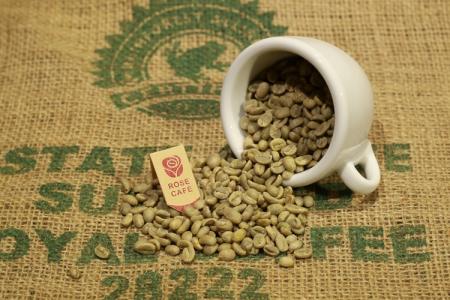
Yega Ficher Manor, planted by European monks.
Yejia Xuefei is actually more common to use the traditional washing method to show her beautiful taste. Yega Xuefei, which is washed with water, has a clean and light taste, with a very strong aroma of jasmine and citrus citric acid. In ancient Chinese, Yirga means to settle down, while Cheffe refers to wetlands, as can be seen from such place names.

Yunnan coffee variety bourbon bourbon coffee bean variety
At present, catimor is the most widely planted in Yunnan, and a small amount of typica,bourbon is planted in Baoshan. Although they all belong to Arabica species on a large scale, these varieties are very different in nature. Iron pickup typica: the most classic high-quality Arabica species, many commercial improvements are derived from this. It is recognized that the taste is excellent.
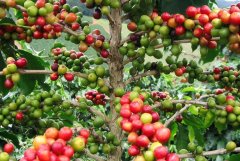
The main coffee producing area in mainland China is Yunnan Province, which was first planted in Binchuan.
Boutique coffee (specialty coffee) is also called specialty coffee selection coffee. It refers to coffee made from a small number of raw beans with excellent taste grown in an ideal geographical environment. Depending on the special soil and climatic conditions in which they grow, they have outstanding flavor. After strict selection and classification, this kind of coffee is hard in texture, rich in taste and stylish.

Description of taste and flavor of Yega Xuefei G2 coffee beans
Description of the taste and flavor of Yejashefi G2 coffee beans the coffee trees of Faye Xuefei were planted by monks in Europe (a bit like Belgian monks growing wheat to brew beer) and were later transferred to farmers or co-operatives. Yejassefi is actually constructed by surrounding coffee communities or cooperatives, including Edido Idido and Harford near Fog Valley Misty valley.
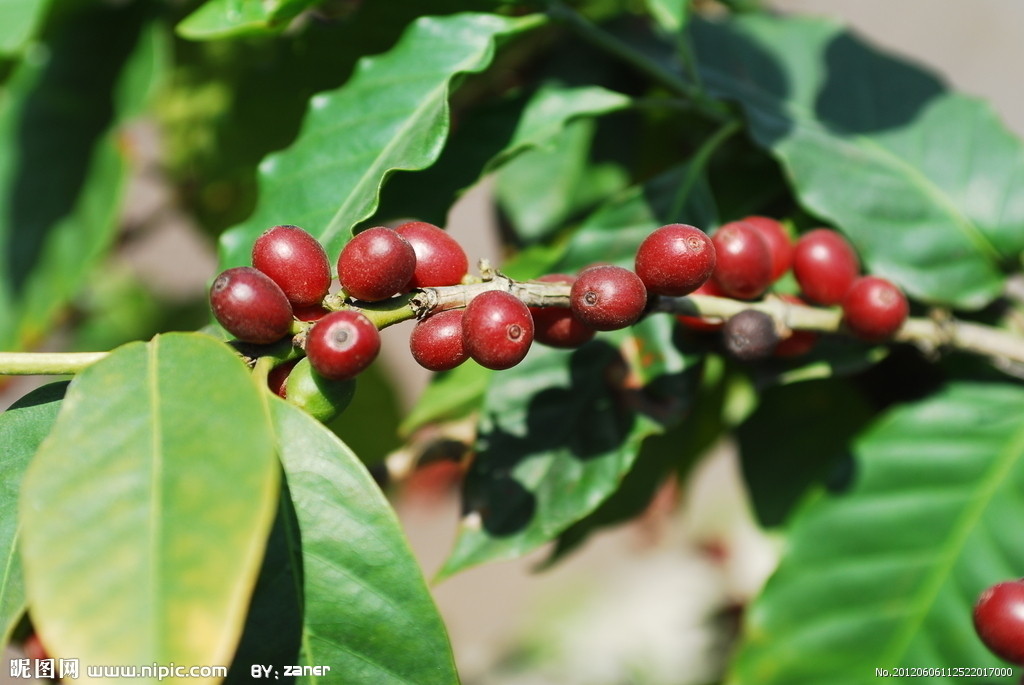
How long will it take for coffee to be planted before it can be harvested? The harvest from coffee tree planting to coffee beans is long.
Coffee trees take 3-5 years from planting to fruiting. 6-10 years of coffee trees are the most likely to bear fruit, about 15-20 years, is the harvest period. Coffee trees are usually bred in nurseries and grow into saplings, and then moved to coffee farms a year later, in full compliance with the way the Arabs planted and cultivated coffee trees. Coffee trees will continue to take root downward and upward in the first four or five years of their growth.

Flavor description of Katim Coffee beans introduction of varieties produced by grinding scale
Katim Coffee Bean Flavor description Grinding scale production area Variety introduction this variety belongs to high and stable yield. The results of trial planting in different ecological types show that as long as it is planted in accordance with high-yield cultivation techniques, a higher yield will be obtained. the average yield per mu is more than 150 kg, and the small area can reach more than 400 kg. 1. The state-run Lujiang farm in Baoshan City planted 12.6 mu in March 1991.

What is the altitude above which coffee beans are planted?-Coffee bean planting conditions
Coffee beans are planted above sea level-coffee bean planting conditions the origin of coffee trees is Ethiopia in Africa. In botany, coffee trees belong to the evergreen trees of the subgenus Rubiaceae, and coffee beans, commonly known as coffee beans, are the seeds of the fruit of coffee trees, just because they are shaped like beans, so they are called coffee beans. Climate is the decisive factor in coffee cultivation.

Alishan Mazu boutique coffee beans the latest coffee introduction has a unique flavor and full taste
Alishan Mafeel coffee belongs to alpine coffee and belongs to the high-quality boutique coffee in Taiwan. It ranks first in Asia and eighth in the world. Coffee trees are mainly planted in southern Taiwan, such as Alishan in Chiayi County, Taiwan. because of its high altitude, Alishan is not only suitable for growing tea, but also more suitable for growing coffee. Belong to coffee

Dominica Coffee Flavor description Grinding characteristics introduction of Fine Coffee beans in producing areas
To trace the origin of Tibica, we should first talk about the coffee trees originally planted in Martinique. These trees were planted by Dominicans as far back as the early 18th century, so Dominica began growing coffee as early as that time. For a time, the Caribbean was almost synonymous with coffee production, but in recent years Cuba, Haiti and other producing areas have been severely damaged by Hurricane George.

Introduction to the characteristics of Katim Coffee varieties treated by Flavor and Taste Grinding degree in Yunnan Province, China
Katim coffee bean is a variety with high and stable yield. The results of trial planting in different ecological areas show that as long as it is planted in accordance with high-yield cultivation techniques, a higher yield will be obtained, with an average yield of more than 150 kg per mu and a small area of more than 400 kg. 1. The state-run Lujiang Farm in Baoshan City planted 12.6 mu in March 1991. The land has no shade and is irrigated once in the dry season.